If your city or county asked you for a site plan before they’ll approve your building permit, you’re not alone. Every day, homeowners across the United States hit this same wall. They know what they want to build. They have a contractor ready. Then the building department sends them a checklist, and somewhere near the top is the phrase: “Submit a site plan.”
I’m Engineer Wasim, founder of Site Plans Online USA. My team has prepared over 10,000 permit-ready site plans for homeowners, contractors, builders, and developers across every state. In this guide, I’ll explain exactly what a site plan for a permit is, when you need one, what it must include, and how to get one without delays.
What Is a Site Plan for a Permit?
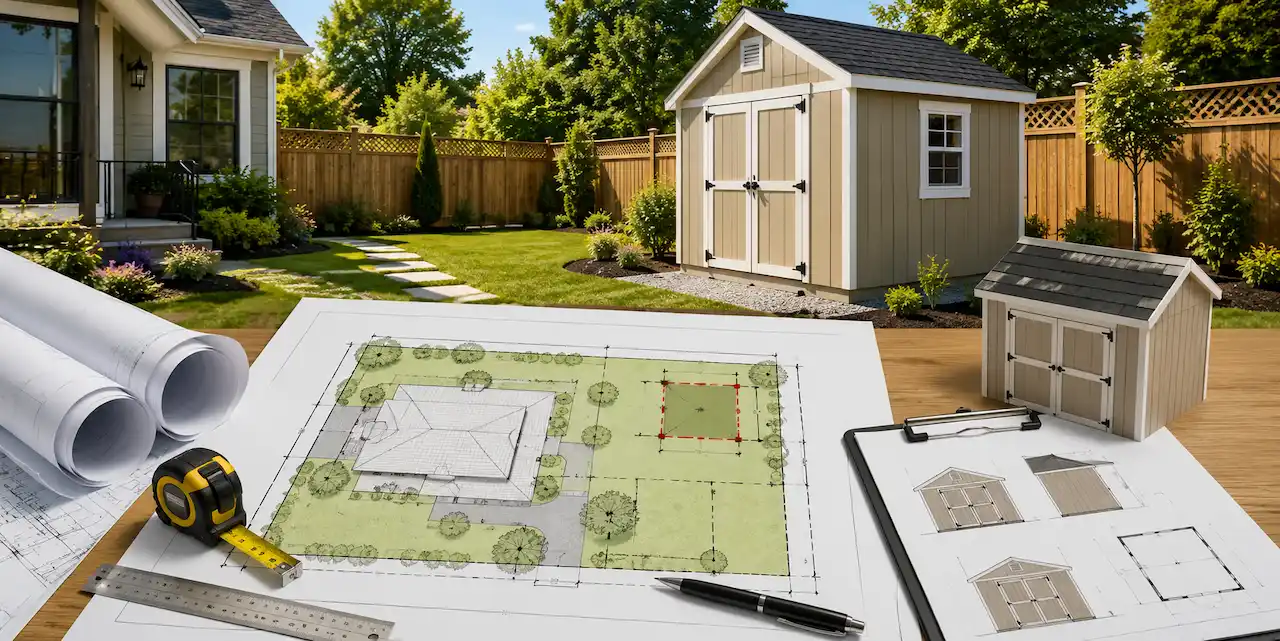
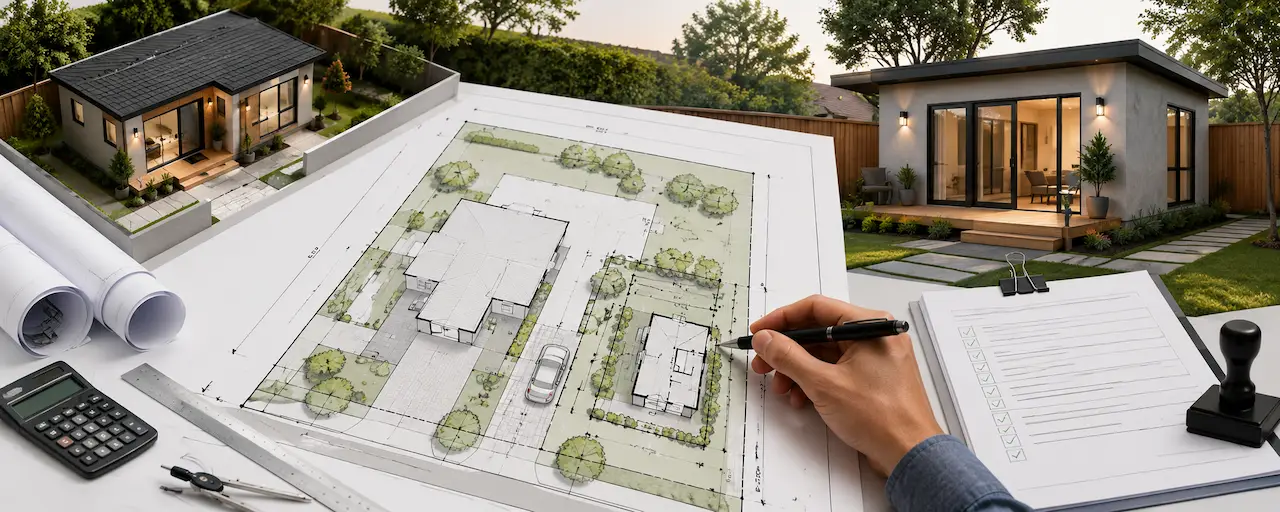
A site plan for a permit is a scaled, overhead drawing of your property. It shows where your home sits on the lot, where your proposed project will be built, and how everything relates to the property boundaries.
Think of it as a bird’s-eye view of your property drawn to scale, labeled, and formatted for your specific city or county building department.
This drawing is not a floor plan. It is not a blueprint of the building’s interior. It is a property-level drawing that answers one question: where does this project sit on the lot, and does it meet the rules?
When Do You Need a Site Plan?
In most cities and counties across the United States, you need a site plan any time you apply for a building permit that involves work on the exterior of your property or affects the footprint of your structures.
Common projects that require a site plan:
- Pool permits — show pool location, setbacks from property lines, and barrier compliance
- Fence permits — show fence line, height, and setbacks from property lines
- Shed and accessory structure permits — show shed placement and distances to lot lines
- Deck and patio permits — show deck dimensions, attachment point, and setbacks
- Home additions — show where the addition connects to the existing house and all setbacks
- Garage additions — show garage location relative to property lines
- ADU permits — show accessory dwelling unit location, parking, and lot coverage
- Driveway permits — show driveway width, location, and connection to the street
- Commercial permits — show building footprint, parking, access, and site modifications
The rule is straightforward: if your project changes what’s on the exterior of your property, your building department almost certainly wants a site plan.
Use our Site Plan Requirements Checker to confirm exactly what your project needs.
What Must a Site Plan Include?
This is where most homeowner-drawn plans fail. The permit office isn’t looking for a rough sketch. They’re looking for a specific, formatted document that contains all the information they need to evaluate your project against local codes.
Here’s what a permit-ready site plan typically must include:
Property basics:
- Property boundaries with dimensions in feet
- Legal description and parcel identification number
- Property address and adjacent street names
- North arrow
- Scale label and graphic scale bar
Existing conditions:
- Footprint and dimensions of the existing house
- All other existing structures garages, sheds, pools, patios, fences
- Driveway and paved areas
- Easements, if recorded on the property
- Setback lines from zoning code
Proposed work:
- Proposed structure clearly labeled and dimensioned
- All setback dimensions from property lines to proposed structure
- Impervious surface calculation (total hard surfaces vs. lot area)
- Any utility connections if required by your jurisdiction
Format:
- Title block with owner name, address, date, preparer name, and scale
- PDF format for digital submission
The exact requirements vary by city, county, and project type. A pool permit site plan in Florida requires barrier compliance notes. A commercial site plan requires parking calculations. A shed permit in California may have different wind load notes than one in Texas.
That’s why every site plan we prepare at Site Plans Online USA is built from scratch for your specific address and jurisdiction not adapted from a template.
Site Plan vs. Plot Plan vs. Survey
These three terms confuse almost everyone.
Site plan — A prepared drawing showing your property and proposed project. This is what most permit offices require. It can be prepared by a drafting professional without a licensed surveyor.
Plot plan — This is the same thing as a site plan in most jurisdictions. Some cities use the term “plot plan” in their application materials. When they ask for a plot plan, they want a site plan.
Survey — A legal document prepared by a licensed surveyor that certifies the exact location of your property boundaries. A survey provides more precision, but it’s not always required for a permit site plan. We use GIS data, parcel records, and satellite imagery when a survey is unavailable which covers the large majority of residential permit projects.
If your jurisdiction specifically requires a licensed survey, they will say so. Most residential permit applications do not.
Read more: Site Plan vs Survey vs Plot Plan — What’s the Difference?
Why Do Site Plans Get Rejected?
In my experience preparing thousands of permit site plans, the most common rejection reasons are almost always preventable.
Missing setback dimensions
The building department needs to see the exact distance from your proposed structure to every property line — front, rear, left side, right side. If you draw the pool but don’t label the distances, the reviewer can’t confirm compliance. Instant rejection.
Wrong or missing scale
“Not to scale” is not acceptable for a permit site plan. The plan must state the drawing scale — usually 1 inch equals 20 feet for residential — and include a graphic scale bar.
Existing structures not shown
Every structure on the property must appear on the plan, even if it has nothing to do with your project. A shed in the backyard that isn’t on the plan is a correction notice.
No north arrow
Small detail, universal requirement.
Impervious surface not calculated
Many cities and counties limit how much of your lot can be covered with hard surfaces. If you’re adding a deck or a pool deck and the total coverage exceeds the maximum, you’ll hear about it. Show the math on the plan.
PE stamp missing for commercial work
Most commercial permits require a plan reviewed and sealed by a licensed Professional Engineer. Submitting without one is an automatic hold.
Our Permit Rejection Analyzer helps you identify exactly what’s wrong with a plan that’s already been returned.
Can You Create a Site Plan Online?
Yes and this is how Site Plans Online USA works.
You do not need to schedule a site visit. You do not need to meet with a drafter in person. The entire process is handled remotely.
Here’s what we need from you:
- Your property address
- Project type (pool, fence, addition, ADU, commercial, etc.)
- Permit comments from your city or county if you have them
- Survey or plat map if available (not required for most projects)
- Sketches or photos if you have them
From there, we pull verified GIS data, parcel records, and county zoning information for your specific address. We draft your site plan to scale, formatted for your building department’s submission system.
Most residential site plans are delivered within 12 to 24 hours. Commercial plans and PE-stamped plans take longer.
For our Florida clients, we also operate Site Plans FL — a Florida-specific permit site plan service with county-level data for all 67 Florida counties.
How Much Does a Site Plan Cost?
Site plan pricing depends on project type, complexity, and whether a PE stamp is required.
For a straightforward residential permit — pool, fence, shed, deck — our site plans start at a flat rate. Commercial projects cost more due to the added detail required. PE-stamped plans include engineering review.
Use our Site Plan Cost Calculator to get an instant estimate for your project.
What’s always included regardless of price:
- GIS-verified property data
- County-specific setback research
- All required site plan elements
- Free revisions if the building department requests changes
How Site Plans Online USA Works
- Send your project details — property address, project type, permit comments, survey if available
- We research your property — GIS data, county zoning, setbacks, impervious surface limits
- We draft your site plan — to scale, labeled, formatted for your building department
- You review the draft — request any changes before we finalize
- We deliver your permit-ready PDF — ready to upload to your city’s permit portal
We serve clients in all 50 states. For Florida, visit Site Plans FL.
Frequently Asked Questions
How fast can I get a site plan?
Most residential site plans are delivered within 12 to 24 hours of receiving your project details. Commercial and PE-stamped plans take 2 to 5 business days.
Do I need a survey?
Not for most residential permits. We use GIS data and parcel records for most projects. If you have a survey, send it it improves accuracy.
What if my plan gets rejected?
We revise at no extra cost. Forward the correction notice and we update the plan within 12 hours.
Do you serve all states?
Yes. Site Plans Online USA serves all 50 states. We also operate Site Plans FL specifically for Florida projects.
Can contractors use your services?
Yes. Many contractors, pool companies, fence installers, and permit expediters send us multiple projects per month.